
This post may contain affiliate links. If you use them we earn a small commission at no extra cost to you.
We've all seen the photos of packed shuttles, crowded trails and long lines waiting to get into Zion Canyon. It's an incredible place. The second most visited national park. But during peak season, the crowds can distract from all the beautiful scenery.
Winter's different.
The crowds thin out considerably and the packed shuttles are nowhere to be found. The scorching heat of summer is replaced by surprisingly mild temperatures and, best of all, most of the same trails are still accessible.
If that sounds like the Zion you were hoping for, then we have a lot more info for you in this guide.
You'll still need to come prepared, remain flexible, and be ready for winter conditions, but we've put all this together based on our own experience of navigating the park in the off-season. It's got everything you need to decide if this is the right time of year for you to visit.
Why Visit Zion National Park in the Winter
Thinner Crowds
Zion's popularity has risen sharply over the past decade.
The park was already seeing over 3 million annual visitors back in 2015, but now it's averaging closer to 5 million every year. It's the second busiest national park, according to recent statistics.
But there's a sharp contrast between peak season and winter.
From December through February, monthly visitation gets cut roughly in half. We're talking about 200,000 people instead of 500,000+. That makes a big difference.
Trailheads are easier to access, viewpoints aren't nearly as crowded, and it feels like there's more space to truly experience the park.
Suprisingly Mild Weather
You might picture the mountainous terrain of Utah and imagine the winter weather being quite harsh.
But it's probably much milder than you'd expect. In fact, it can be one of the more comfortable times of year to explore the park.
Daytime temperatures often land somewhere in the 40s or 50s (5-10C). If you're like us, those are pretty ideal conditions to be out on the hiking trail.
Sunny skies aren't uncommon in the winter and once the sun warms up the canyon mid-day, you may find yourself shedding a layer or two.
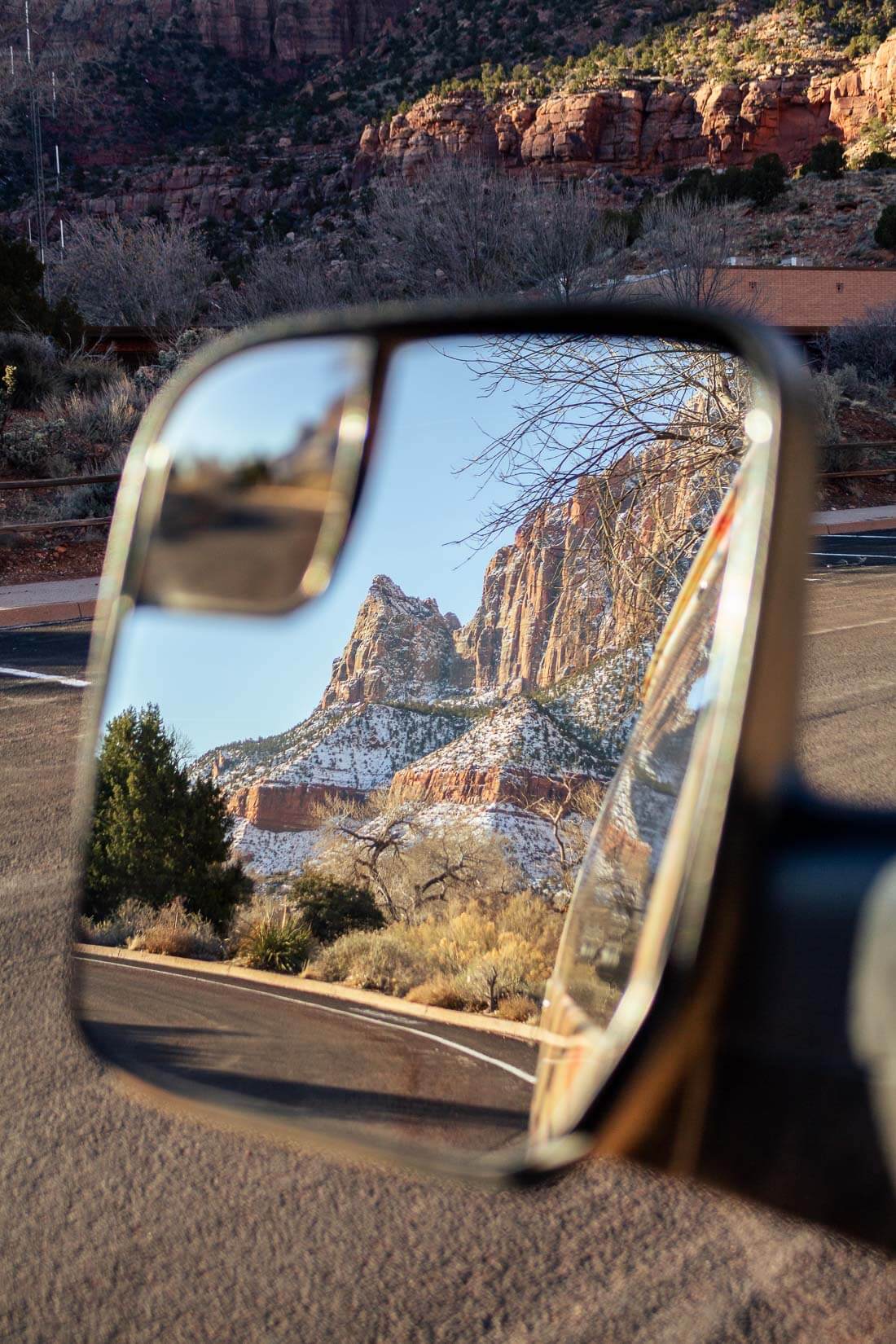
When snow does make an appearance it's usually light and at the higher elevations. It rarely sticks for long on the canyon floor. And when it does linger higher up, the end result is an even more beautiful landscape that you just don't get to see during the summer - a dusting of white powder all over the red rocks that creates a dramatic scene.
We’ll break down the weather in more detail below, but overall, this is a season where you can hike comfortably without battling extreme heat or unpredictable storms.
Easier Permits
There's a permit system for hiking Angels Landing. And it can be quite competitive.
You'll have to enter a lottery and hope you win one of your preferred hiking dates. Otherwise, you can still try to get a permit the day before you want to hike.
The good news is that permits can be much easier to get in the winter. With fewer visitors in the park, the demand drops, and your odds of securing one go up.

Driving the Zion Canyon Scenic Drive
One big advantage to a winter trip to Zion is that you can drive yourself through the canyon.
During high season, from March to November, private vehicles aren’t allowed on the Zion Canyon Scenic Drive. Instead, you’ll need to rely on the park shuttle system to access trailheads and viewpoints.
But in the winter months, that restriction is lifted.
That means you can move at your own pace, stop where you want, and not worry about catching a shuttle or waiting in long lines.

The Downsides
As much as we love Zion in the winter, it’s not without a few trade-offs.
For one, the nearby town of Springdale slows down quite a bit. Some restaurants and shops operate on reduced hours, and a handful may close for the season altogether. It’s not a ghost town by any means, but it’s definitely quieter than what you’d find in spring or fall.
You may also find fewer options when it comes to camping and accommodations, especially inside the park. Some of the campgrounds operate on a seasonal basis.
And then there are the shorter days. You'll get around 10 hours of daylight, versus the 14 at the height of summer.
With less daylight to work with, you’ll need to be a bit more intentional about how you plan your hikes and viewpoints.
That said, for us, these downsides are a small price to pay for everything winter in Zion has to offer.
Getting Around Zion in the Winter
With the park shuttle buses hibernating for the winter, getting around Zion becomes a much more straightforward and honestly, more enjoyable, experience.
The main route into the park, Highway 9, is open year-round and well maintained.
Through the Zion Canyon area, snow rarely sticks around for long. Any snowfall typically melts off quickly, especially once the sun hits the road.
But as the highway climbs into the eastern section of the park, elevation increases, and snowfall is more common. The roads are usually plowed quickly, but you should still come prepared for winter driving during or immediately after big storms.
On any Utah road trip, but especially one during the winter, we'd recommend having some roadside emergency gear on hand. Things like extra layers, water, a headlamp, and simple traction aids can go a long way if conditions take a turn or you run into an unexpected delay.
You can check out our full list of winter driving essentials here.
There are a few seasonal road closures to be aware of in the park:
// Kolob Terrace Road typically closes for several months due to snow.
// Kolob Canyons Road, on the northwest corner of the park, closes frequently in the winter.
// Lava Point Road closes most years due to snow.
The good news is that none of these roads are located in the main Zion Canyon area where most visitors spend their time, so for the majority of trips, they won’t have much of an impact.
Before heading out, it’s still a good idea to check current conditions and closures on the park’s website.
What Hikes to do in the Winter
Winter hiking in Zion can be incredible. But it does require a bit more preparedness than other times of the year.
When snow and ice are present, it can completely change the character of the trail.
Hikes with a reputation for being straightforward when dry can become difficult or even dangerous. On trails with steep drop-offs and serious elevation gain that's not something to take lightly.
We've seen it firsthand.
On one winter visit, we watched people sliding down Walter's Wiggles on the way to and from Angels Landing. It was a sheet of ice at the time. And without anything to help stabilize them, people were falling on their butts and hoping for the best.
A couple simple pieces of gear can make all the difference:
// Traction (like microspikes or Yaktrax) give your hiking boots a lot more bite on slick surfaces.
// Trekking poles can add stability on uneven and slippery trails.

// Top tip: You should also come prepared for some mud. Since snow and ice tend to melt quickly at the lower elevations, it can leave behind a mess on the trails. It doesn't hurt to have an extra pair of clean shoes to slip on when you get back to the car, some trash bags, and a change of clothes or something to put down on the seats.
With those things in mind, here are some of the best hikes to consider during the winter months:
Angels Landing
Remember what we just said about snow changing the whole character of a trail?
Angels Landing is an epic hike, no matter what time of year you do it.
But winter conditions can completely re-write the experience you have.
We hiked it with a considerable amount of snow on the trail. And we would rank that as one of the sketchiest things we've ever done in our lives.
The chains section, which has some very intimidating drop-offs, feels even more exposed than usual. We felt pretty secure with our Yaktrax, but there was definitely a lot of risk involved. And the people who are totally unprepared for what they're getting into pose a threat to everyone on the trail below them.
It's an unforgettable experience, but if you plan to do it, please bring the proper gear, take it slowly, and turn around before the chains if conditions don't feel right.

In case you don't get a permit or just don't feel like going to the top of Angels Landing, you can still hike up to Scout Lookout, two miles in. The views are almost equally impressive and it's much more tolerable if you don't like steep drops.
The Narrows
Yes, you can hike The Narrows in the winter.
But you’re going to feel it.
Wading through the Virgin River beneath those sheer canyon walls is a surreal experience, and in the winter it may be calmer and quieter, but it's also going to be very cold.
Once again, proper gear is a must.
You can rent dry bibs with built-in neoprene socks, special boots, and dry bags from local outfitters.
Canyon Overlook Trail
The Canyon Overlook Trail has one of the most impressive views down into the park, and it's one of our top picks to catch sunrise.
In the winter, it can be even better. When the canyon is covered in a light blanket of snow, the contrast between red rock and white accents is hard to beat.
The trail itself is short and generally considered easy, but this is one of those you don't want to underestimate. Icy patches can form, so tractions and/or poles are a good idea.

Watchman Trail
If you’re staying at the campground, this one is a no-brainer.
The Watchman Trail is easily accessible, tends to be less crowded than many of Zion’s other hikes, and still offers great views looking out over the canyon and toward the Watchman spire.
It’s a solid option for a morning or afternoon hike when you don’t want to venture too far or deal with more difficult terrain.
Pa'rus Trail
For something easy and straightforward, the Pa’rus Trail is one of the best options in the park.
It begins near the visitor center, runs along the Virgin River, and can take you all the way up to the mouth of the canyon. It's fully paved and almost completely flat, making it a great choice if any bad weather has recently come through.
Riverside Walk
The Riverside Walk is on the easier end and still well worth your time.
It's a paved trail that leads to the entrance of The Narrows, giving you a chance to experience the northern end of the canyon without committing to a full river hike and getting wet.

Other Winter Activities in Zion
Go Canyoneering
If you're up for a little more adventure, canyoneering in Zion might be just what you're looking for.
Guide services like Zion Adventures run half and full day expeditions throughout the year. They're tailored for experienced adventurers and first timers as well. Dry suits will keep you (relatively) warm as you rappel down cliffs, scramble over obstacles, and wade through pools.
Take a Day Trip
Turn your trip to Zion into a multi-park adventure with a side trip to see Bryce Canyon. It's a two hour drive away and has stunning views during the winter.
The Bryce Amphitheater, with its uniquely shaped hoodoo rock formations, is especially beautiful when the colorful rocks pop against a backdrop of white snow.

Winter Weather in Zion National Park
While the winter months in Zion are considerably cooler and wetter than spring or summer, they're still mild. Average highs hover in the mid 50s and there's usually only a couple inches of precipitation each month. You can expect the temperature to drop to freezing or just below on most nights.
Here's a closer look at what each month typically looks like, to help you choose the best time to visit:
December
The beginning of winter, marked by a gradual decline in the average daytime high and an increase in precipitation.
Afternoons in the 60s are still common, with overnight temps around freezing.
Because of this transition from fall into winter and the holidays, crowds will still be somewhat high.
January
This is the coldest month of the year in Zion. Expect highs to only reach the mid 50s. Nights will hover around freezing, but could dip down into the teens.
There's an even greater chance of precipitation, and since it only snows on average 2-3 times all winter, this is your best chance of encountering some fresh snow in Zion.
Clear, sunny days are still the norm, and snow or ice will typically only persist on the shady, northern sides of canyon walls and at higher elevations.
February
By February, the pendulum has already begun to swing back and days in the 60s return.
This is, however, the wettest month of winter. Snow is still possible, but less frequent.

Winter Storms
It never hurts to have a backup plan, and while severe storms aren't very common, they can roll through, creating hazardous road conditions and some closures within the park.
Fortunately, southern Utah is full of options for enjoying the outdoors and staying comfortable. If Zion does get hit with some really bad weather, you could easily flex your plans and visit these nearby areas:
// St. George. Sits at a lower elevation, stays warmer, and is usually snow-free.
// Snow Canyon State Park. A hidden gem with a misleading name. Snow is rare in this desert climate with lava flows, red rock, and great hiking.
Where to Stay
Lodging Options
The only hotel option inside the national park is at the Zion Lodge.
It's hard to beat for convenience, since you can wake up in the canyon and hit the scenic drive as early as you want, getting a head start on people traveling in for the day.
It does tend to book up in advance, even in the off-season and you'll be paying a premium for location, even though the accommodations themselves aren't the nicest in the area.
Venturing out a bit further, you'll find a range of hotel options and short term rentals in Springdale.
This is the most convenient basecamp outside of the park and has restaurants, grocery stores, and coffee shops.
Winter Camping near Zion
If you're like us and travel in a campervan or RV, or just don't mind pitching a tent in the winter, then you can also camp right inside the park.
The NPS keeps Watchman Campground open year-round. There are electric and non-electric sites, as well as flush toilets, but no shower facilities. For those, you can go into town and use the pay showers at Zion Outfitters.
Visiting Zion in winter? Save this post for later!

Need more National Park inspiration? Here ya go:


Some of the links found on our website are affiliate links.
As Amazon Associates we earn from qualifying purchases. We may also receive a small commission at no extra cost to you through other links. Using them is a way of supporting us, helping us offset the cost of running this website, and ensuring that we’re able to continue providing free content and resources.
That makes y’all totally awesome and we truly appreciate the support!
If you've found value in our guides, you can say thanks with a virtual coffee.


Lorem ipsum dolor sit amet, consectetur adipiscing elit. Suspendisse varius enim in eros elementum tristique. Duis cursus, mi quis viverra ornare, eros dolor interdum nulla, ut commodo diam libero vitae erat. Aenean faucibus nibh et justo cursus id rutrum lorem imperdiet. Nunc ut sem vitae risus tristique posuere. uis cursus, mi quis viverra ornare, eros dolor interdum nulla, ut commodo diam libero vitae erat. Aenean faucibus nibh et justo cursus id rutrum lorem imperdiet. Nunc ut sem vitae risus tristique posuere.
Delete