
This post may contain affiliate links. If you use them we earn a small commission at no extra cost to you.
Jumping into van life isn't like going and getting approved for a mortgage, or signing a lease on a new place, where the monthly rent is clearly printed in black ink.
The seemingly up-in-the-air finances of full time life on the road can be one of the most daunting considerations.
We know from first hand experience just how difficult it can be to get your questions answered. How much do I need to budget for van life? What monthly expenses should I plan for? Am I going to blow my whole paycheck on gas and campground fees?
After several years of full-time travel in our self-converted van (we hit the road in 2023) - and thanks to a slightly obsessive, color-coded-spreadsheet habit - we have plenty of real world numbers to answer those questions.
Since lifestyles vary widely, our experience will be just one example. On average we spend $1,200 per month on all our van life specific expenses. That falls nicely into the middle range, since van life can cost somewhere between $800 to $3000+ per month, depending on your situation.
Let's take a quick look at the average costs of living in a van and then we'll break down each monthly expense, with our personal insights and tips on saving money. This post is primarily about daily, monthly, or annual expenses, but at the end we'll also touch on the initial start up costs of a conversion.
Quick Overview of Average Van Life Costs
Fuel: $150-$600 per month, depending on travel style.
Auto insurance & registration: $40-$150 per month, but varies widely between states and providers.
Parking & camping: $10-$1,000 per month, depending on travel and comfort preferences.
Phone & internet: $50-$300 per month.
Vehicle maintenance: $50-$165 per month.
Gym membership: $16-$70 per month, per person.
Basic services (water, waste, laundry, etc.): $25-$120 per month.
Food & groceries: $350-$550 per month, per person.
Recreation: varies widely. Budget $50-$500 per month.
Monthly Van Life Expenses

Gas
Our average cost of fuel (for a gasoline Ford Transit van, averaging 14.5 MPG) over the past several years has been $459/month or $5,516/year.
That number has remained impressively consistent. But there are plenty of variables that could affect it.
How much you drive, fuel efficiency, type of fuel, and average fuel cost could push this number higher or lower.
But for reference, we drive 20,000 miles per year and spend most of our time in the western half of the US, where gas prices trend higher. Our van is on the lower end of the efficiency range.
If you expect to be driving every day or across several states on a regular basis, budget higher. If you think you'll find a place to camp out for a while and limit driving, you could plan for less.
Don't forget to factor in heating. Most campervans have a gas or diesel powered air/water heater. If you'll be spending a lot of time in a cold climate you may want to factor in an extra 15-30% fuel cost.
Our monthly cost: $459
Budget: $150-$600
Parking & Camping Fees
This is one category where how much you spend is completely under your control.
We love that the freedom of van life allows us to camp on public lands for free most of the year. We spend about 300 nights boondocking on BLM or National Forest land and that really saves us some money.
These days, an average campsite can cost anywhere from $25 to $55, with full hook-up sites at luxury resorts going for $100+.
As much as we love free camping, there are times when campsites make strategic sense. For example, when we visited Yosemite for several weeks it paid to get a primitive site close to Yosemite Valley, rather than boondocking outside the park and driving in and out every day.
If you need electric hook-ups to charge house batteries, need easy access to fresh water or a dump station, or want a hot shower, you can strategically plan to stay at a campground and get the biggest bang for your buck.
And no matter how you cut it, you'll eventually need to pay parking fees, whether it's in a state or county park, a city, or at some kind of attraction, so plan for a bit of that.
Our monthly cost: $132
Budget: $10-$1,000
Vehicle Maintenance
The annual cost of maintenance is a category that we see being underestimated.
Sure, it may only cost you a few bucks here or there to replace wiper blades, refill fluids, or air up your tires.
But what about when that $1,500 bill comes along to replace all the brake pads and rotors?
Or the $1,000 for new tires?
Those are real examples of big costs we've incurred over the years.
The average annual maintenance on a Mercedes Sprinter Van is $900-$1,400. It's $1,000-$1,500 for a RAM ProMaster, and $700-$1,400 for a Ford Transit.
Ours has worked out to $1,628 per year. That's $136/month.
We get regular oil changes done at a Ford dealership and we have an oil undercoating done every 1-2 years for rust protection, so that drives up our average cost.
The main thing to keep in mind here is that large expenses are a reality about once a year, and can sometimes pop up unexpectedly. Look up the average annual maintenance cost for your vehicle and plan to set some cash aside monthly or have it in the annual budget.
Our monthly cost: $136
Budget: $50-$165
Auto Insurance & Registration
Your insurance premiums can vary drastically, but affordable coverage for RVs and campervans is becoming easier to find.
One thing to note is that you will need RV or motorhome insurance, not just standard auto insurance. When we purchased coverage for our DIY build, we had to answer some extra questions and provide documentation, including receipts, for the major components and upgrades we installed.
There are now several companies that specialize in RV insurance and you can also have your rig appraised for a more official record of its value.
We use Allstate, because they've been our provider for home, renter's, and auto insurance in the past and we get full coverage, including liability, collision, and comprehensive insurance for $62/month. That's a 'motorhome' policy with the van insured up to its actual cash value.
Depending on where you live and what policy discounts you receive it could be higher, but there's plenty of competition for you to shop around.
This is also a good point to remind you of any other annual fees, like registration, permits, or inspections. Don't forget to factor those in based on your home state.
Our monthly cost: $67
Budget: $40-$150
Getting value from this post? sign up for our monthly emails and get even more

Basic Services (Laundry, Water, Sanitation Dump, etc.)
Laundromats have cost us $55/month on average and we go once a week.
We almost never pay for water or to dump waste. Using iOverlander to find free places to fill up on fresh water or just asking around at gas stations has always worked for us. California is the only place we've ever struggled to find free water, outside of very remote areas.
If we had to pay for some reason, we'd budget about $10-$20/month.
Dump stations are a different story and they charge a fee more often than not. Fortunately, we have no black water tank, so we're not always forced to use them. We can dump the liquids from our composting toilet in any restroom and empty the solids a few times a year. We use free dump stations to empty our gray water tank.
If we had to dump black water and use dump stations regularly, we'd budget $20-40/month.
Our monthly cost: $74
Budget: $25-$120
Phone & Internet
The national average cell phone bill is about $100/month and ours falls right in line with that. For two lines on T-Mobile with unlimited data, we pay $94.
Having reliable, high speed internet on the road is one of our campervan essentials. We both work from the road, so having WiFi, even while we're hanging out off-grid somewhere, is a must.
For that reason, we have a T-Mobile hotspot that costs us $500/year, or $42/month averaged out. Combined with our weBoost cell signal booster, that gets us coverage in about 60-70% of the places we travel.
But since we prefer to spend our time out in the middle of nowhere, we've been using Starlink for a few years. The service can be paused if we don't plan to use it, otherwise it's $165/month.
Our average total cost for phone and internet is $274/month. Definitely on the high side.
Our monthly cost: $274
Budget: $50-$300
Gym Membership
Another essential that doesn't cost a lot is a gym membership. Let's be honest, being a Planet Fitness member is almost a requirement for van lifers.
It's about $31/month for a couple or $16/month for one person, including the annual fee.
We use Planet Fitness constantly, all over the country, both to work out and for the convenience of a nice hot shower outside the van.
Our monthly cost: $31
Budget: $16-$70
Groceries & Food
So, in full disclosure, we don't consider food or groceries a van life expense. When we lived a traditional lifestyle in a house or renting an apartment, all of the above costs were wrapped up into our rent/mortgage, utilities, and vehicle expenses. We track those closely and use them to compare apples-to-apples with what we used to spend.
Our grocery and food costs, on the other hand, haven't really changed much. So we don't track those very closely. But every single time we mention van life expenses someone asks us "What about groceries?"
So, we'll talk about groceries.
We suppose that we probably do spend a little bit more because you're very limited on what quantities you can buy while living in a small space. There's no stocking up on bulk discounts.
Also, grocery prices vary a bit throughout the country, with more remote locations having higher prices and limited selection. All in all, expect to spend a bit more than average.
But this category depends heavily on your preferences. We cook almost all our own meals and rarely dine out. We prefer higher quality products and sometimes choose more expensive, organic options.
We think you can spend as little or as much as you want on food and it has little to do with living in a van.
Our monthly cost: $965
Budget: $350-550/person
Recreation
Lastly, and similar to food, is recreation.
You can live on the road, spend most of your time boondocking on public land, and visit free parks and attractions, spending very little money on recreation.
Or you can hit every paid attraction you see.
It just depends on what you like to do and how much you're willing to spend.
We don't even track recreation expenses, because we just take each opportunity as it comes and evaluate the cost. If we're going to be in Florida at the perfect time to kayak and snorkel with some manatees, then we're probably just going to pony up. Maybe we skip something else down the road.
What you have to ask yourself is: what are my current hobbies, or what hobbies do I see myself enjoying while out on the road, and what's a reasonable cost for those?
Most van lifers would probably budget anywhere from $50-$500/month, but you do you.

Van Life Budget & Money Saving Tips
As we said above, our average monthly van life expenses (equivalent to rent and utilities, plus transportation costs) have hovered around $1,200 for several years in a row.
We like to think we know a thing or two about saving on living expenses.
So here are our biggest tips on how to keep the cost of van life down and reduce your monthly spending:
// Maximize your stays on public land. Learning the art of finding a suitable boondocking site makes a big difference in how stressful van life can be. But it will also take a huge load off your bank account. Imagine living rent free the whole month, instead of paying hundreds in campground fees.
// This skillset will also serve you well when looking for places to fill up on water and dump waste for free.
// Get yourself an annual America the Beautiful pass. It includes access to most federally managed lands around the country for no additional fee. That means national parks, but also tons of other recreation sites, like some national forest hot springs.
// Invest upfront in solar power and batteries. Solar is especially cheap, compared to paying for full electric hook-ups at a campsite.
// Use the Upside app to get cash back on fuel purchases. Honestly, it sounds too good to be true, right? But we've been using Upside for years and have gotten back over $200. You can choose from tons of gift cards or have it deposited straight into your bank account.
// Along those same lines, you can also use the GasBuddy app to compare and shop around for the best gas prices. Don't forget to sign up for every loyalty program, too. Those little discounts per gallon really add up over the year.
// Consider Harvest Hosts for cheaper camping. We wrote up a full review on Harvest Hosts and shared our experience. In a nutshell, you can spend nights at businesses around the country in exchange for a $30 purchase. This can be a great way to save some cash compared to pricey campgrounds, but read our review and see if it's right for you.
// Shop around for van insurance and compare multiple quotes before deciding on one. We've seen quotes vary widely between companies, so take some time to be sure you're getting the best deal. It also doesn't hurt to evaluate annually before you renew to see if you could be saving somewhere else.
We share our expenses every month
Cost Of Converting A Van
The Van
Now that we've fully examined some common van life costs throughout the year, let's talk about one of the biggest expenses: the upfront cost of the van purchase.
We've written an entire blog post on choosing the best van for your situation. That will help you walk through all the considerations that affect price, such as new or used, average maintenance costs, diesel versus gasoline, and resale value.
When choosing your new home on wheels, costs can range from $3,000 for a basic minivan up to $75,000 for a new Mercedes Sprinter. Expect to pay somewhere around $25,000 to $40,000 for a used cargo van, like a Ford Transit.
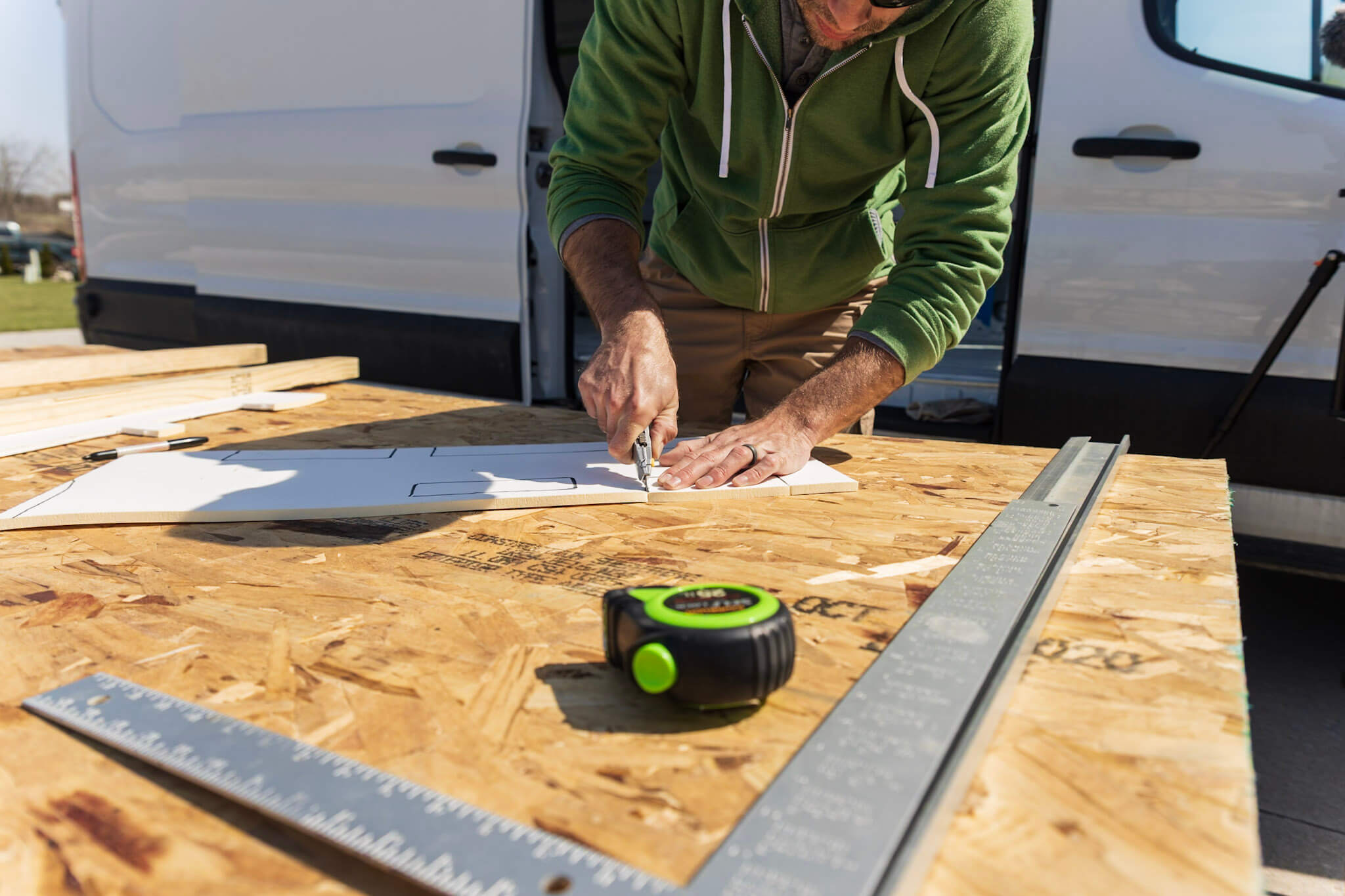
The Conversion
The DIY conversion option will obviously save you money over a pre-built van.
A basic conversion, with no bathroom, a simple electrical system, and using upcycled materials might cost $3,000 to $20,000.
More elaborate van builds can range from $25,000 all the way up to $100,000 for something ultra luxurious.
If you're interested in even more real life costs, we also wrote a blog post breaking down the full cost of our own conversion.
Planning for van life? Pin this post for later!

Want to learn more about van life? Check out these guides:


Some of the links found on our website are affiliate links.
As Amazon Associates we earn from qualifying purchases. We may also receive a small commission at no extra cost to you through other links. Using them is a way of supporting us, helping us offset the cost of running this website, and ensuring that we’re able to continue providing free content and resources.
That makes y’all totally awesome and we truly appreciate the support!
If you've found value in our guides, you can say thanks with a virtual coffee.


Lorem ipsum dolor sit amet, consectetur adipiscing elit. Suspendisse varius enim in eros elementum tristique. Duis cursus, mi quis viverra ornare, eros dolor interdum nulla, ut commodo diam libero vitae erat. Aenean faucibus nibh et justo cursus id rutrum lorem imperdiet. Nunc ut sem vitae risus tristique posuere. uis cursus, mi quis viverra ornare, eros dolor interdum nulla, ut commodo diam libero vitae erat. Aenean faucibus nibh et justo cursus id rutrum lorem imperdiet. Nunc ut sem vitae risus tristique posuere.
Delete